


Sewer Line Repair: A Homeowner’s Guide
You’re rinsing dishes on a Tuesday night when the tub upstairs starts gurgling back at you, uninvited. A few days pass, and the patch of grass by the back fence turns suspiciously green and soft underfoot.
Then, on a Sunday evening with company over, the downstairs toilet backs up and won’t stop. Nobody plans for this moment, but it’s a familiar one for a lot of Fort Worth homeowners, and it almost always traces back to the same place: the main line.
That’s how most sewer line trouble reveals itself: quietly, then all at once. This guide walks Fort Worth homeowners through what causes sewer line damage, how it’s diagnosed and repaired, and what to expect from Service Squad Plumbing for sewer line repair.
Signs You Need Sewer Line Repair
Most sewer line damage builds gradually, so the early clues are easy to write off. As you read through this guide, keep an eye out for:
- Multiple slow drains at once, not just one fixture
- Gurgling sounds from toilets or drains
- Sewage odor in the yard or near floor drains
- Unusually lush, green patches over the sewer line
- Soggy or sunken areas in the yard
- Sewage backing up into tubs or floor drains when you run the washer
Any single sign on its own might mean nothing. Two or three together usually point to a crack, a collapse, a blockage, or root intrusion in your main line, and that’s your cue to call for sewer repair before it turns into water damage inside the house.
What Causes Sewer Line Damage
Understanding the cause shapes everything that follows. Fort Worth’s clay-heavy soil expands and contracts with moisture swings, putting constant pressure on buried pipe.
Add tree roots hunting for moisture, aging clay or cast-iron pipe in older neighborhoods, grease buildup, and gradual ground settling, and pipe failure becomes a matter of when, not if. The culprits we see most often are root intrusion, corrosion in homes built before the 1980s, bellied pipe, and simple old age.
How We Diagnose and Fix It
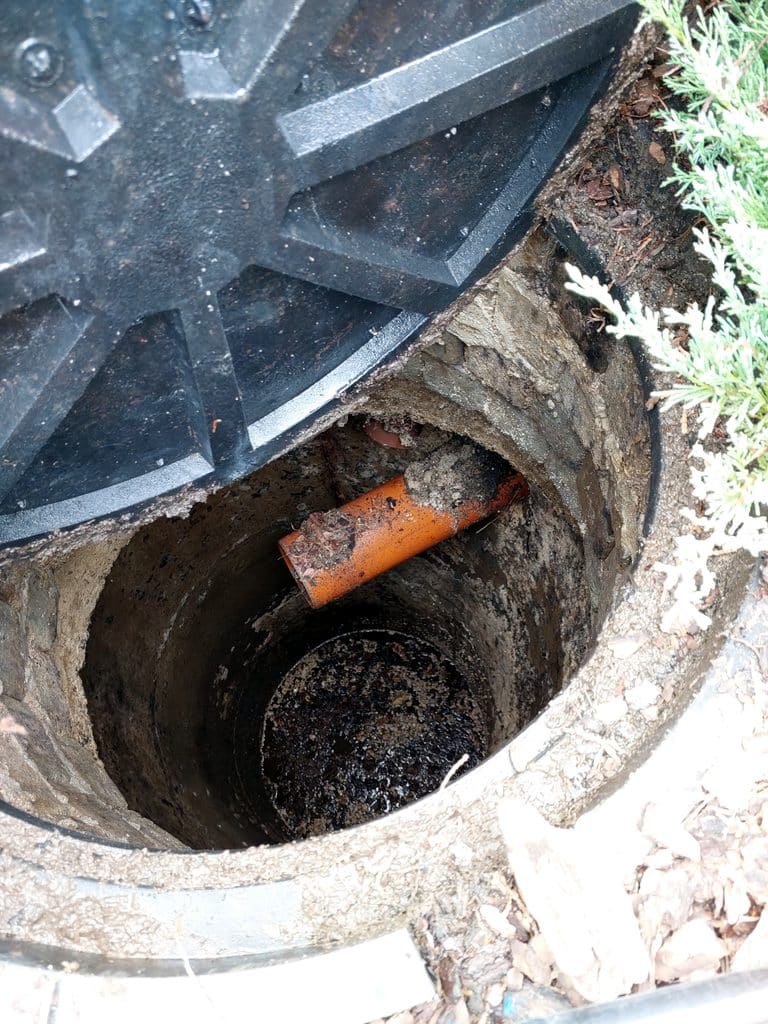
The next step is diagnosis, not demolition. We don’t recommend replacing a line based on guesswork, and you shouldn’t accept that from any sewer plumbers near you either. Our process starts with a camera inspection that shows exactly where the damage sits, which tells us whether the fix is a targeted spot repair, a trenchless reline, or a traditional dig-and-replace.
Trenchless sewer line repair is our first recommendation whenever site conditions allow it. Instead of trenching across your whole yard, we access the line through one or two small entry points and either pull a new pipe through the old one (pipe bursting) or install a resin-coated liner that cures in place (pipe relining).
Traditional open-trench replacement is still the right call for severely collapsed pipe or lines with too many bends for trenchless equipment. We’ll walk you through which method fits your situation honestly, instead of steering you toward the pricier option.
Here’s how the two approaches generally compare:
| Method | Yard Disruption | Typical Timeline | Best For |
|---|---|---|---|
| Trenchless pipe lining | Minimal, one or two access points | Often a single day | Root intrusion, minor cracks |
| Trenchless pipe bursting | Minimal, one or two access points | Often a single day | Collapsed or undersized pipe |
| Open-trench replacement | Significant, full trench along the line | Multiple days | Severe collapse, sharp bends |
Sewer Line Replacement Cost
One of the most common questions in this guide is also the hardest to answer with a single number: sewer line replacement cost varies by project. Three factors drive the estimate more than anything else, the length of the damaged line, how deep it’s buried, and which repair method fits once a camera inspection confirms the actual damage.
Trenchless methods are generally priced by the linear foot of pipe, while open-trench replacement adds excavation, restoration, and permitting on top of materials, which is why two homes with similar-looking problems can end up with different quotes.
Small, localized repairs also cost meaningfully less than a full replacement, which is exactly why we lead with a camera inspection rather than a phone-quote guess.
Why Call Service Squad Plumbing for Sewer Line Repair?
We’re a local plumbing company, not a national call center dispatching whoever’s available. When you search for sewer line repair near me, you want a team that knows Fort Worth’s soil, older pipe materials, and permitting requirements, and that shows up with a stocked truck instead of scheduling a second visit.
If you’re comparing sewer plumbers near you, use this guide as a checklist: ask whether they run a camera inspection before quoting a price, whether they offer trenchless options, and whether the technician is licensed and background-checked. If any answer is no, keep calling around.
FAQ
How much does it cost to repair your sewer line?
It depends on the damage’s length, depth, and required method. Small repairs cost far less than full replacement, and trenchless work often beats traditional excavation on total price.
How to fix a damaged sewer pipe?
A camera inspection reveals the fix needed: patching for minor cracks, clearing plus a liner for root intrusion, or trenchless bursting, relining, or open-trench replacement for collapsed pipe.
Is relining sewer pipe worth it?
Usually, yes. Relining skips the digging, wraps up in a day, and resists future root intrusion. It costs more per foot than a patch, but often less than full excavation.
Will homeowners insurance cover sewer line repair?
Usually not. Standard policies exclude gradual wear, corrosion, and root intrusion, the top causes of failure. Some insurers offer optional endorsements that extend coverage, so check your policy.